
by Miles Guida
On communion Sunday at New Trinity Baptist Church, gubernatorial candidate Jermaine Johnson sat in the front pews for one of several campaign stops in South Carolina’s churches. Johnson, a Baptist deacon and Black Democrat, was joined by his wife, who wore a traditional tilted church hat. From the pulpit, his voice broke into the singsong cadence of deep southern worship: “I look at my elders and I think about everything that they have had to overcome… and it makes me wonder if they ever thought that their prayers would be answered, that they would ever have somebody who they could say, ‘I’ve been praying for this young man all of my life.’” A chorus of praise rang out in confirmation.
Down the road at Faith Fellowship Baptist Church, Pastor Garrett Fricks opened the Republican gubernatorial runoff forum with a prayer. Under a pale gray suit, he wore a white T-shirt with “FREEDOM” inscribed on the front, a nod to the late Charlie Kirk. “Even in the political realm, we want Christ Jesus, our Lord and Savior, to be magnified always.” Alan Wilson began his remarks with a message of humility: “They’re worldly things: titles, fame, glory, wealth; it doesn’t matter… no matter what happens on Tuesday, my feet are on the ground because my priorities are right.” The platform was decorated with the Republican Party seal and a flag of the original 13 states.
In this corner of the Bible Belt, church and state are inseparable. As attorney general, Alan Wilson has used his office to back several Christian conservative initiatives, filing multiple amicus briefs supporting the use of public funds for religious schools. For Democrats vying for South Carolina’s early presidential primary, Brookland Baptist Church, a Black megachurch and political hub around the state’s capital, is a must-visit.
That Brookland Baptist is considered a Black megachurch reflects a reality famously expressed by Dr. Martin Luther King Jr.: “Eleven o’clock on Sunday morning is the most segregated hour in Christian America.” In South Carolina and elsewhere, this fact carries a political twist: entrenched in separate cultures, communities, and congregations, Black South Carolina and White South Carolina have carved distinct political camps from the same faith.
That wound is especially sore after Republicans’ failed redistricting push in May. The Supreme Court’s landmark decision narrowing Section 2 of the Voting Rights Act unleashed a monster that federal law had kept dormant for decades, kicking off a rush by Republicans to expand their majority weeks before early voting. Historic first-day turnout effectively sealed the maps as they were, affirming concerns by Democrats and several Republicans that redrawing districts would disrupt the election process. Senate lawmakers voted to stall the effort by a thin margin. Black religious leaders spearheaded the effort to kill the bill, celebrating its death on the State House steps with the famous gospel hymn “I’m on the Battlefield for My Lord”. Jermaine Johnson praised the effort; Alan Wilson declared the fight “not over.”
Amid the racial divide, the candidates’ mixed tickets suggest an effort to bridge it. Mike Reichenbach is the only Black Republican in the state Senate and Alan Wilson’s pick for lieutenant governor. A native Ohioan adopted by White parents, Reichenbach is an “active member” of Newspring Church, a contemporary megachurch with locations across the state. Reichenbach has openly rejected secular norms: “we talk about separation of church and state… but you can’t separate God from our hearts and that drives our decision making.”
Jermaine Johnson has tapped Sam Skardon for the ticket. Skardon began as an aide for the late civil rights icon John Lewis before returning to his native Charleston to direct community lending with a focus on women- and minority-owned small businesses. The Episcopalian has been a present force at the intersection of race and religion in Charleston, reflecting on the 2015 Emmanuel AME Church shooting during his campaign for state Senate: “Something that many of us in the White community don’t want to acknowledge is, we made that shooter… we grew up under statues of John C. Calhoun and not John Lewis”.
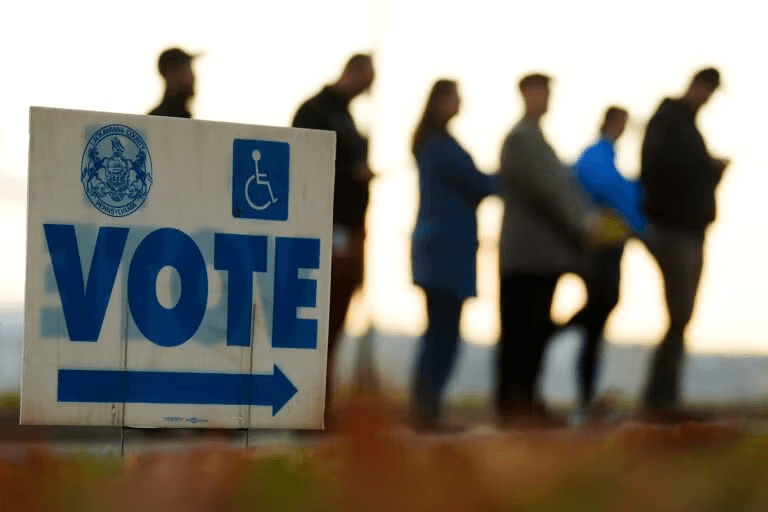
In South Carolina, winners and losers are ultimately decided by who shows up to the polls. Black and White South Carolinians together made up 95% of registered voters in 2024, with a 60-point partisan gap between them. Democrats rely on high Black turnout bolstered by urban White liberals to win statewide races and a handful of competitive state legislative seats. The Republican Senate majority leader, Shane Massey, spelled it out in a warning to his colleagues amid the redistricting fight: “you’re going to motivate Black turnout. And there will be repercussions for that. There will be down-ballot repercussions for that.” The midterm elections are a test of that hypothesis.