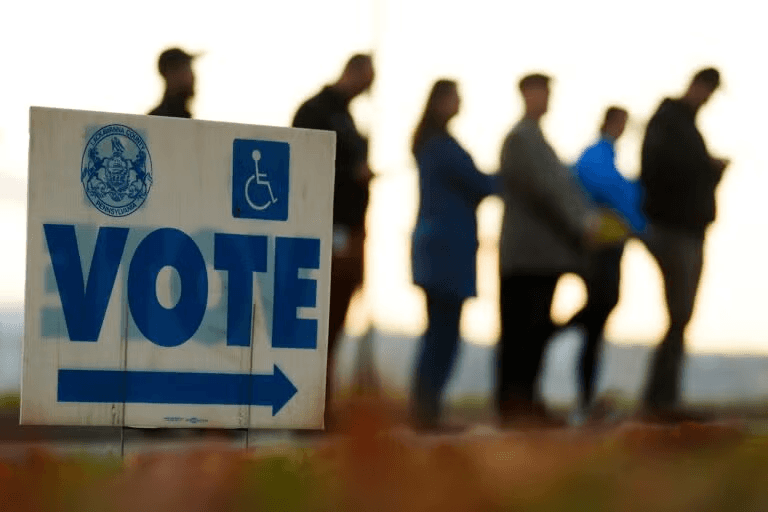
Legislative gridlock, extremist viewpoints, voter apathy, and polarized attitudes have become defining features of 2025 — a landscape shaped by an increasing number of “safe seats.” As “safe seats” multiply and district lines are drawn with ruthless partisan precision, millions of voters find themselves silenced before they even reach the ballot box. By eroding competition, shielding incumbents, and diluting voter impact, “safe seats” have accelerated democratic unraveling, undermining the very foundation of American democracy, designed to uphold the will of its people.
The Rise of Safe Seats: A Contorted System
“Safe seats” are electoral districts where one particular political party has an extremely high probability of winning, virtually guaranteeing the outcome. Safe seats, entrenched by one-party rule, are an extremely common phenomenon in America, with only a handful of districts being decided at a competitive margin. The Cook Political Report, a non-partisan political analyst estimates a mere 18 congressional districts out of 435 are likely to be toss-ups in the upcoming 2026 midterms, a consequence arising from contortion.
Safe seats don’t just arise by accident. Politicians meticulously engineer them using sophisticated computer algorithms — an undemocratic practice known as partisan gerrymandering. Gerrymandering, a practice as old as the pillars of our nation itself, with origins in Massachusetts in 1812 — enables state legislatures to draw electoral maps for partisan advantages. The federal judiciary remained relatively hands-off on the issue of electoral district engineering until the 2019 Rucho v. Common Cause decision. The Legal Information Institute at Cornell Law School, reports that the precent-setting case established claims of partisan gerrymandering as “nonjustifable political questions” beyond judicial reach. With new assurance of its legality, the Brennan Center for Justice highlights that partisan gerrymandering has continued to flourish, with strategic redistricting escalating to unprecedented levels.
Lawmakers often rely on two main techniques to secure safe seats: packing and cracking. Through packing, politicians consolidate disfavored groups or parties into as few districts as possible, effectively “wasting” their votes; cracking disperses disfavored groups among multiple districts, diluting their influence. By manipulating district boundaries, politicians safeguard incumbents from challengers and diminish voter influence, making political outcomes almost inevitable.
These techniques aren’t just theoretical — they shape electoral maps in almost every corner of our nation. A striking example can be found in North Carolina, where redistricting efforts have sparked intense debate and contention.
Amid a national push by Republican-led legislatures to redraw congressional maps ahead of the 2026 midterms, North Carolina followed suit in late October. The new map takes aim at the 1st Congressional district, the state’s lone “swing seat,” decided at competitive margins. The redistricting specifically targets a region in the Eastern part of the state known as the “Black Belt,” a historically concentrated area of Black voters who have helped elect a Black Democrat to Congress every year since 1992. While the new district lines dilute long-standing Black voting power, the map has been upheld by federal judges, who have cited the Rucho v. Common Cause precedent in their decision.
Democrat Don Davis, the current representative in the district, responded to the federal court’s ruling, proclaiming, “Although the court’s decision keeps North Carolina at the center of this nation’s redistricting battle, we will continue to show eastern North Carolinians why they matter most. We will not let these blatant power grabs silence the voices of eastern North Carolinians.”
One voter from the district, voicing discontent, remarked, “This new redistricting plan is intended to further dilute the Black vote in our state, which is racist and immoral.”
For millions of residents living in districts such as the 1st, these engineered boundaries send a clear message — their voices bear no weight, and matter no longer. When voters feel abandoned by the people in power, it only fuels apathy, effectively entrenching feelings of disenfranchisement.
Quiet Distrust: Voter Apathy Takes Root
Safe seats do more than skew representation; they erode trust in the electoral process altogether. Voters nationwide have increasingly felt neglected by their elected officials in a system that feels broken and unjust, bypassing the polls outright. Fair Vote, a non-partisan organization dedicated to election reform, noted that in 2024 alone approximately 116 million of all eligible voters abstained from voting entirely.
Widespread disengagement like this isn’t just a one-time phenomenon. As millions of Americans have seen their voices diluted by meticulously engineered safe seats, many have lost faith in the power of their vote, a concept referred to as low political efficacy.
In the 2024 “How Poor and Working- Class Black People See Politics study,” one member of the electorate, disillusioned by a seemingly unresponsive government, expressed the feeling plainly, “Voting to me?... we just don’t count or maybe something wrong with the system. It just seems… predetermined” (p. 28).
This rising sense of disenfranchisement expands across generations. Younger voters, frustrated and exasperated, have begun to express rising feelings of disenfranchisement. A post-2024 election survey by Inside Higher Ed, an online higher education publication, notes that over 50% of college students felt like their vote carried little weight on the election outcome. Mariekk Griffiths, a 26-year old cook living in the suburbs of Denver, summed up the sentiment, emphasizing,“There’s a sense that democracy isn’t working for young people. There’s a lack of belief that democracy is even able to improve their lives.”
Despite widespread disengagement, moments of political mobilization can still transpire. The November 2025 off-year elections disrupted all trends, with voter turnout skyrocketing well past expectations. Millions of voters, disenchanted by the current administration, proudly cast their ballots on the night of the 4th, a surge that will only continue to be tested as we approach the 2026 midterm elections. In a whirlwind night for the Democrats, Virginia’s gubernatorial candidate Abigail Spanberger and New Jersey’s Mikie Sherrill were elected into office. The New Jersey Monitor, a non-partisan online news organization, cited record-breaking turnout in the state, the highest in any non-presidential race since 1998, a promising feat in an era so often plagued by democratic withdrawal.
However, in a world bound by manipulation, even historic surges in participation do little to offset the broader systemic erosion of democracy. Contrary to House elections, gubernatorial races remain unbound by the pre-determined system, effectively capturing the will of an entire state population. When races hold actual competitive value, voters feel the tangible impact of their vote, which galvanizes increased voter turnout. The stark contrast between competitive and non-competitive election turnout underscores a critical dynamic: in a system that feels rigged, voter fatigue can suppress engagement, regardless of isolated spikes in turnout.
Voter apathy not only has the ability to foster lower voter turnout; it enables extremist politicians to thrive in an unchecked environment. With an already disengaged public, a small, highly-motivated minority can disproportionately influence election outcomes, rewarding radical politicians, who are never held accountable for their decisions.
Polarizing Rhetoric and Legislative Gridlock: A System that Rewards Partisans
Safe seats aren’t just merely capable of diluting the voices of millions; they empower the most dogmatic of politicians. The dynamics and incentives for candidates running in competitive districts are vastly different from those running in safe districts. In competitive seats, candidates often take on a more centrist platform, appealing to more ideologically diverse constituents. If these candidates shift too closely to the ideological wings of their party, they risk losing the support of critical centrist voters needed to win. This dynamic not only squashes the ideological wings of each party, but makes lawmakers more responsive to shifts in voter preferences in order to maintain electoral support.
By contrast, in safe seats, incumbents’ primary threat comes from the ideological poles of their own political party. With greater homogeneity, primary electorate voters in these districts may punish centrist candidates, rewarding partisan challengers who are less likely to diverge from party standards.
During his January 6th, “Save America” speech, President Trump further amplified the threat, attacking Republicans who would not vote in objection to counting the electoral votes, stating, “If they don’t fight, we have to primary the hell out of the ones that don’t fight. We primary them.”
The primary electorate has also found itself being sustained by a disproportionate, dismal number of voters. According to the Clark Digital Commons, an online repository for scholarly and creative works from Clark University, only about 20% of all eligible voters nationwide participate in primary elections. Low turnout only exacerbates division in an era stained by partisanship. The voters who tend to participate in primaries typically represent a small, highly motivated, ideological segment of a party’s base, who favor the most polarized of candidates. Chosen candidates often represent the “fringes of political parties,” embracing extremist viewpoints that are unrepresentative of the general population.
With little incentive to appeal to the center of the political spectrum, incumbents often focus on satisfying the demands of their party, objecting bipartisan efforts. Consequently, cross-party cooperations become rare, with the legislative process stalling in polarized gridlock.
The recent 43 day government shutdown starkly illustrates the consequences of legislative gridlock built around a system that rewards partisans. Beginning on October 1st, the federal government entered a state of dysfunction, centered around an ongoing surrounding healthcare subsidies. As the Republican-controlled Congress remained unwilling to compromise with Democrats, millions of federal workers were furloughed, essential services, such as SNAP, were halted, and ordinary Americans bore the brunt of partisan obstinacy.
The shutdown underscores the human cost of a system dominated by safe seats and ideological dogmatism. When legislators are insulated from accountability and parrot the extremes of their party, compromise becomes virtually impossible. In moments of peril, lawmakers have repeatedly shown that they are willing to trade the interests of the American people for partisan dissension, clinging to the very forces that erode democracy. In this political landscape, pre-determined by engineered districts, the promises of democracy, to serve and represent the people, are hollow, as partisanship and resentment continue to flourish.
Looking Ahead: Democracy in Peril
As voters wake up to the sobering reality, redistricting efforts in states like Texas and California have continued to dismantle the founding principles of our democracy. In Texas, maps consolidate partisan advantage, while in California, strategic boundary drawing dilutes the voices of historically underrepresented communities. These maneuvers are not a harmless political strategy; they are the diminishment of effective democracy, a system meant for the people. In this engineered landscape, millions of voters feel powerless and disenfranchised, abandoned to a polarized climate unwilling to listen. If left unchecked, such systems will fuel further polarization, suppress engagement, and reward extremism, eroding the representative government our nation was built to uphold. Without reform, the people’s voice will die in silence.