
The Ride to Class: School Transportation and Educational Equity in Michigan’s 2026 Governor’s Race
by Viren Gowda
On a typical weekday in Detroit, most public school students do not ride a yellow bus. A 2018 study found that roughly two-thirds get to school by car, another tenth rely on public transit, and only about one in five takes the dedicated bus service that still defines the American image of “going to school” (Einhorn). That split matters because access to transportation is unequal. Many students commute long distances, but the system does not guarantee every student a ride.
Two decades of expanding school choice in Detroit have given families more options about where to send their children, but access to a seat does not guarantee access to a ride there. A 2018 Urban Institute study of nearly 190,000 students across Denver, Detroit, New Orleans, New York City, and Washington, D.C. found that Black students travel further to school on average than white or Hispanic students in choice-heavy districts, even as income alone was a weaker predictor of distance (“Road to School”). Detroit-specific research from Michigan State University confirmed the same pattern locally: despite leaving the city at similar rates, Black and Hispanic students in Detroit travel longer to get to school than their white and Asian peers (Cowen; Geary). Distance, in other words, tracks race independent of how far a family can afford to travel.
National data backs this up outside Michigan as well. A 2022 study in the journal Urban Education examined bus finance and provision across American school districts and within New York City, and found significant racial and ethnic disparities in who actually gets bus service in the first place (Weinstein et al.). The researchers behind that study describe transportation access as a core, if underappreciated, piece of educational equity, not a logistics afterthought, but a determinant of whether a student’s enrollment translates into actual attendance.
That link between a ride and a classroom seat is not abstract. A 2024 study published in Education Finance and Policy tracked Michigan students over seven years and found that when economically disadvantaged students became eligible for school bus service, they were roughly 20 percent less likely to be chronically absent than similar classmates who were not eligible (Edwards). The same study found no measurable effect on test scores, since transportation got kids through the door, but it did not by itself fix what happened once they were inside. That distinction matters for how policymakers should think about the problem: a bus pass is not a cure-all, but it is one of the few levers shown to reliably move a specific, stubborn number.
And that number is a genuine crisis in Michigan. A University of Michigan Poverty Solutions analysis found that homeless students in the state were chronically absent at two and a half times the statewide rate, that economically disadvantaged students missed school at triple the rate of their higher-income peers, and that these two groups together accounted for three-quarters of all chronically absent students statewide, despite being under half the student population (Erb-Downward and Watt). Michigan law does not require districts to provide busing to students at all, with the exception of students with disabilities (Altavena). Everyone else rides, walks, or gets driven at the discretion of a district that may not have the drivers to spare. In recent years, Michigan districts have contended with a bus driver shortage that has led them to cut routes and cancel runs, in some cases leaving students with no way to get to school (Altavena; Llanes).
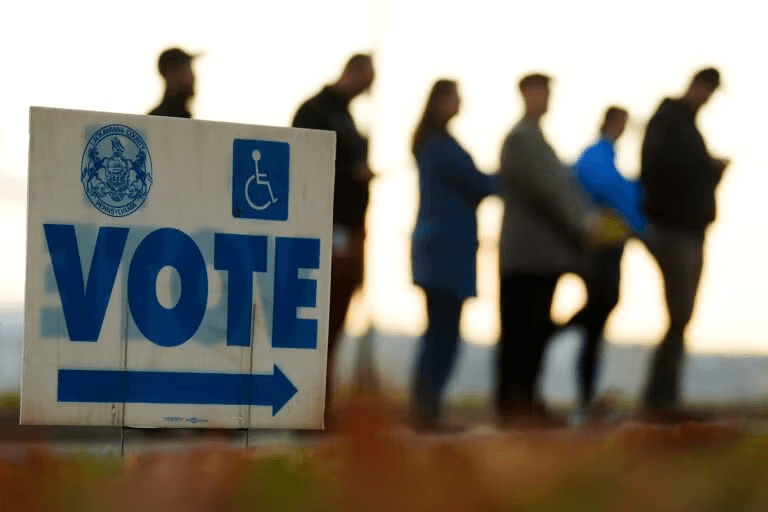
This is the backdrop for Michigan’s 2026 race to succeed term-limited Gretchen Whitmer. Secretary of State Jocelyn Benson, the Democratic nominee, and U.S. Representative John James, the Republican nominee, have made education a central theme of the race, but transportation itself has stayed mostly offstage, folded into bigger arguments about funding and accountability (Higgins, “From Literacy”). Benson has proposed moving Michigan away from its current flat, one-size-fits-all school funding formula toward a weighted model that directs additional money to students with the greatest needs, alongside a statewide strategy specifically aimed at chronic absenteeism (Higgins, “From Literacy”; Steele). James has centered his education platform on accountability and school choice, while also promising to work with parents and teachers on absenteeism, arguing that Michigan’s problem is one of effective spending rather than insufficient funding (Steele). Both campaigns, in other words, are talking about the problem of kids missing school, but neither candidate has put forward a detailed plan for school-bus access.
That gap is notable given how loudly the issue has surfaced elsewhere in Michigan politics this year. Newly elected Detroit Mayor Mary Sheffield used her acceptance speech to specifically commit to addressing the transportation barriers that keep students from getting to class, even though the mayor’s office has no direct authority over the city’s schools (Higgins, “These Are”). That a city’s incoming chief executive felt compelled to claim transportation as her own issue, even without the power to fix it, says something about how visible the problem has become to the people living with it daily, even as it remains a supporting detail in the race for the office that actually controls school funding statewide.
Michigan is spending more on K-12 education than it ever has, a record of $22.9 billion for the coming school year, with per-pupil funding rising from $10,050 to $10,250 (Steele). But the research on transportation suggests that how equitably that money reaches students who cannot get themselves to school may matter as much as how much of it there is. A weighted funding formula, of the kind Benson has proposed, could in principle route resources toward exactly the districts and students most affected by transportation gaps, but only if transportation is treated as its own variable, not absorbed into a broader conversation about “equity” that never quite says out loud what equity is for. Whoever takes the governor’s office in January will inherit a state where many students’ attendance, and by extension their education, still depends on whether a bus shows up.